Everest Base Camp Trek and Kala Patthar Ascent

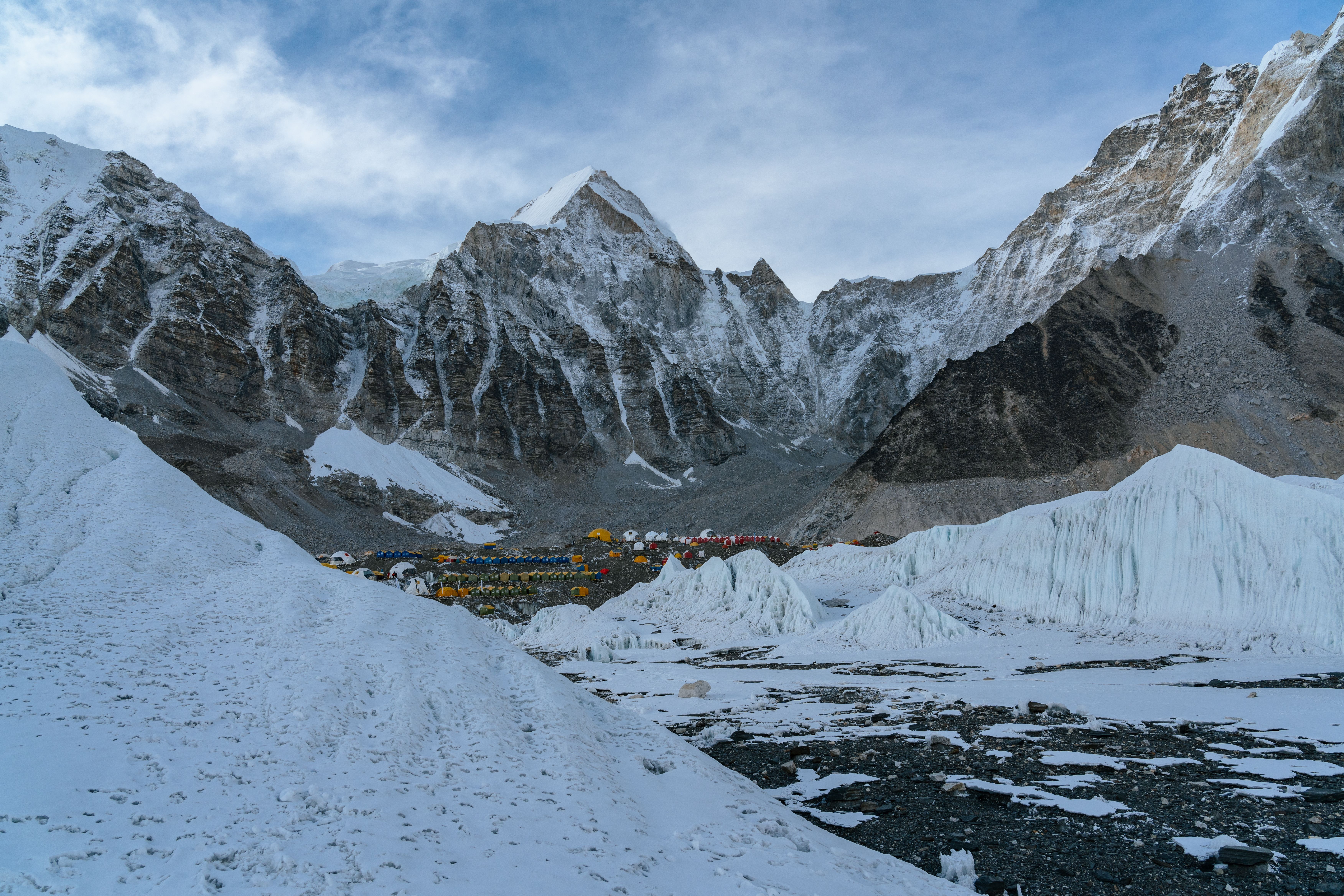
Everest Base Camp amid the glacier and snow-covered Himalayan peaks
Stupa in Kathmandu with prayer flags against a blue sky
Carved wooden panel of a traditional temple in Kathmandu

Nepal

Country

16 days

Duration

Trekking

Format

Challenging

Difficulty

Basic fitness

Preparation level

About the program

Everest is the highest mountain on the planet. In this program, we trek to its foot, to Everest Base Camp, where mountaineering expeditions begin their journey to the summit. Our route passes through Khumbu region: Sherpa villages, suspension bridges, Buddhist monasteries, and high-altitude valleys. We meet in Kathmandu. From there, we fly directly to Lukla, where the trekking part of the journey begins. We gain altitude gradually. We stay extra nights in Namche Bazaar and Dingboche and take acclimatization hikes. Our goal is to prepare for the ascent ahead and for days above 5,000 metres. In addition to Everest Base Camp, we climb Kala Patthar. In clear weather, we will see Everest and the surrounding peaks from here. This is one of the main highlights of our program, after which we begin the return journey to Lukla. This trek is suitable even for participants without extensive mountain experience, but good physical fitness is necessary. The route includes treks lasting up to 8–9 hours and several consecutive days at elevations above 4,000 metres. A mountain guide accompanies the group throughout the program. We also work with local English-speaking guides and porters.

What to expect

❋

Everest Base Camp—the main objective of the route

❋

Ascent of Kala Patthar at 5,645 metres

❋

Panoramic views of Everest, Lhotse, Ama Dablam, and other Himalayan peaks

Route by day

Stupa in Kathmandu with prayer flags against a blue sky
Carved wooden panel of a traditional temple in Kathmandu

Day 1

Arrival in Kathmandu

Arrival in Kathmandu, the capital of Nepal. Please arrive by 13:00 local time. A team representative will meet participants at the airport. Transfer to the hotel and check-in. Once the group has assembled, the guide checks that every participant has suitable footwear, warm clothing, a sleeping bag, and everything else needed for the trek. Any missing items can be purchased tomorrow in Kathmandu. In the evening, we gather for a welcome dinner, get to know the team, and discuss the route.

Day 1Route day5-star hotel in Kathmandu, two people per roomAccommodation type1400 mMax altitude for the dayHotel breakfast the next morning included; other meals paid separatelyIncluded meals
Rows of burning butter lamps in a Kathmandu temple

Day 2

Preparation Day in Kathmandu

One day remains before the trek begins. We check the equipment once more and, if necessary, go to the shops for any missing items. We pack the luggage to be carried by porters separately and prepare the backpacks we will carry each day. Free time can be spent walking around Kathmandu. In the evening, there is a group briefing and an early bedtime.

Day 2Route day5-star hotel in Kathmandu, two people per roomAccommodation type1400 mMax altitude for the dayHotel breakfast included; other meals paid separatelyIncluded meals
Mountain village in the Khumbu Valley among clouds
Himalayan valley on the route from Lukla to Phakding

Day 3

Flight from Kathmandu to Lukla and Trek to Phakding

Breakfast at the hotel in Kathmandu, then transfer to the airport. Check-in, baggage weighing, and a direct flight to Lukla. We collect our luggage, meet the local team, and set off toward Phakding. The first trek is short, giving us time to gradually settle into a walking rhythm. On the way, we cross the first suspension bridge in Nepal.

Day 3Route dayLodge in Phakding, 2,610 metresAccommodation type2800 mMax altitude for the day8.5 kmRoute distance4 hrRoute timeBreakfast at the hotel in Kathmandu included; all trek meals paid separatelyIncluded meals
Mountain valley on the trail from Phakding to Namche Bazaar

Day 4

Trek from Phakding to Namche Bazaar

After Phakding, we continue ascending through the valley. We cross Hillary Bridge, decorated with prayer flags. Beyond the bridge, the climb to Namche Bazaar begins—the main settlement in the Khumbu region. The houses stand on a wooded slope, and the town resembles a large amphitheatre. We check in, rest a little, and walk to the monument to Tenzing Norgay. We climb to a viewpoint. In good weather, we will see Everest and Lhotse here for the first time.

Day 4Route dayLodge in Namche BazaarAccommodation type3440 mMax altitude for the day10 kmRoute distance7 hrRoute timeMeals are paid for separatelyIncluded meals
Panorama of Namche Bazaar on the slopes of a Himalayan valley
Himalayan peaks from the acclimatization trail above Namche Bazaar

Day 5

Acclimatization in Namche Bazaar

We stay another night in Namche Bazaar. After breakfast, we set out on an acclimatization hike to the Everest View Hotel. We climb above our overnight elevation and spend several hours there. Then we go to Khumjung, to a monastery that houses a relic known as the “yeti scalp.” In Khumjung, we will also see the first school for Sherpa children, built by the Edmund Hillary Foundation. After the walk, we return to Namche.

Day 5Route dayLodge in Namche Bazaar, 3,440 metresAccommodation type3850 mMax altitude for the day6.5 kmRoute distance4 hrRoute timeMeals are paid for separatelyIncluded meals
A yak resting on a high-altitude trail beneath snow-covered peaks
Monastery and mani stones on the route from Namche Bazaar to Deboche

Day 6

Trek from Namche Bazaar to Deboche

We leave Namche Bazaar and continue deeper into Khumbu. On the way, we visit the Buddhist Tengboche Monastery. It was founded in 1916; pilgrims and mountaineers heading for Everest come here. After the monastery, we continue to Deboche.

Day 6Route dayLodge in Deboche, 3,750 metresAccommodation type10 kmRoute distance7 hrRoute timeMeals are paid for separatelyIncluded meals
Buddhist stupa with Ama Dablam in the background on the way to Dingboche
High-altitude valley between Deboche and Dingboche

Day 7

Trek from Deboche to Dingboche

We continue gaining altitude. We cross a suspension bridge from which, in good weather, we will see Ama Dablam. The trail then leads to Dingboche. After checking in, we rest. At this elevation, it is important to drink enough fluids and pay close attention to our wellbeing.

Day 7Route dayLodge in DingbocheAccommodation type4410 mMax altitude for the day10 kmRoute distance6 hrRoute timeMeals are paid for separatelyIncluded meals
Dingboche village in a broad high-altitude valley
Snow-covered Himalayan peak above Dingboche

Day 8

Acclimatization Day in Dingboche

The second acclimatization day. After breakfast, we climb above Dingboche. We spend some time above our overnight elevation and then descend back. In clear weather, Himalayan peaks are visible from here, and we will see Ama Dablam from a new angle. We return to the lodge by lunchtime. We rest for the remainder of the day.

Day 8Route dayLodge in Dingboche, 4,410 metresAccommodation type4950 mMax altitude for the day5 kmRoute distance4 hrRoute timeMeals are paid for separatelyIncluded meals
Loaded yak on the trail from Dingboche to Lobuche
Glacial landscape and snow-covered peaks near Lobuche

Day 9

Trek from Dingboche to Lobuche

We leave Dingboche heading toward Lobuche. On the way, we pass through a memorial to mountaineers who died in the Himalayas. We then continue climbing to the settlement. The higher we climb, the more basic the conditions in the lodges become.

Day 9Route dayLodge in LobucheAccommodation type4940 mMax altitude for the day8 kmRoute distance6 hrRoute timeMeals are paid for separatelyIncluded meals
Prayer flags above the glacier at Everest Base Camp
Mountain peaks and moraine at Everest Base Camp

Day 10

Lobuche — Everest Base Camp — Gorak Shep

Today we trek to Everest Base Camp. From Lobuche, we first trek to Gorak Shep and then continue to the camp, from which mountaineering expeditions set out to climb. After visiting the camp, we return to Gorak Shep. It is a long day, one of the longest on the route. We will spend a significant part of the route above 5,000 metres. We proceed calmly at a steady pace.

Day 10Route dayLodge in Gorak Shep, 5,150 metresAccommodation type12.5 kmRoute distance9 hrRoute timeMeals are paid for separatelyIncluded meals
Sunrise panorama of Himalayan peaks from Kala Patthar
Ama Dablam above the valley on the descent to Pheriche

Day 11

Ascent of Kala Patthar and Descent to Pheriche

An early start and ascent of Kala Patthar. In good weather, we will see Everest and the surrounding mountains from the summit. After a short stop, we descend to Gorak Shep. We have breakfast and continue down the valley. By evening, we arrive in Pheriche, check in, and rest.

Day 11Route dayLodge in Pheriche, 4,250 metresAccommodation type5645 mMax altitude for the day16 kmRoute distance9 hrRoute timeMeals are paid for separatelyIncluded meals
Icy slope and summit above the route from Pheriche to Namche Bazaar
Prayer flags and Ama Dablam on the way to Namche Bazaar

Day 12

Trek from Pheriche to Namche Bazaar

We continue descending along the familiar route to Namche Bazaar. There will be shops, cafés, and restaurants here again. After checking in, the rest of the time is free. You can rest, walk around town, or visit the Sherpa Museum, dedicated to the history and culture of the people of Khumbu.

Day 12Route dayLodge in Namche Bazaar, 3,440 metresAccommodation type4250 mMax altitude for the day19 kmRoute distance8 hrRoute timeMeals are paid for separatelyIncluded meals
Red and gold prayer wheel in motion on the way to Lukla
Himalayan peak in golden evening light on the way to Lukla

Day 13

Trek from Namche Bazaar to Lukla

The final walking day of the program. We leave Namche Bazaar and return to Lukla through the valleys, forests, and suspension bridges of Khumbu. Before reaching Lukla, we stop at a coffee shop and try the local coffee. After the trek, we rest and pack our things for the morning flight.

Day 13Route dayLodge in Lukla, 2,800 metresAccommodation type3440 mMax altitude for the day18 kmRoute distance9 hrRoute timeMeals are paid for separatelyIncluded meals
Lukla airport amid mountain slopes and Himalayan peaks
Forested valley and river on the way from Lukla

Day 14

Flight from Lukla to Kathmandu

In the morning, we walk to Lukla Airport and fly directly to Kathmandu. After landing, we transfer to the hotel. Check in and rest. In the evening, the whole group gathers for a celebratory dinner and the presentation of certificates to participants.

Day 14Route day5-star hotel in Kathmandu, two people per roomAccommodation type2800 mMax altitude for the dayHotel breakfast the next morning included; other meals paid separatelyIncluded meals
Buddhist stupa and temple architecture in Kathmandu
Boudhanath Stupa with prayer flags in Kathmandu

Day 15

Contingency Day

Contingency day in case of bad weather, a delayed flight, or a cancelled flight from Lukla. If we return as planned, we will spend it in Kathmandu. You can walk around the city, see the sights, or buy souvenirs. If the group wishes, we will arrange a walking tour with a professional Russian-speaking guide. The tour is paid for separately.

Day 15Route day5-star hotel in KathmanduAccommodation type1400 mMax altitude for the dayHotel breakfast included; other meals paid separatelyIncluded meals
Aerial view of the Kathmandu Valley before departure
Himalayan peak above the clouds seen from the aircraft

Day 16

Flight Home

Flight home. The return flight can be scheduled for any time. We arrange transfers from the hotel to the airport according to participants’ flight schedules. This marks the end of the program.

Day 16Route day1400 mMax altitude for the dayHotel breakfast included; other meals paid separatelyIncluded meals

What is included

Included

  • Local English-speaking guides
  • Meet-and-greet at Kathmandu Airport and transfer to the hotel
  • Individual transfer from the hotel to the airport on departure day
  • Domestic flights Kathmandu — Lukla and Lukla — Kathmandu
  • Double occupancy in a 5-star hotel in Kathmandu
  • Three to four nights in Kathmandu, depending on the actual schedule and whether the contingency day is used
  • Double occupancy in upgraded lodges throughout the trek
  • Porter services: one porter for every two participants and carrying up to 12.5 kg of personal belongings per participant
  • Breakfasts at the hotel in Kathmandu
  • Entrance tickets to Sagarmatha National Park
  • Trekker card and documents required to complete the route
  • Emergency oxygen for use in emergencies on the route
  • A group first-aid kit with the guide
  • Consultations on flight tickets, physical training, insurance, and equipment
  • Organizational support before and during the program
  • Branded Sauvage Adventure merchandise

Not included

  • International flights to and from Kathmandu
  • Nepal visa; the original program states an indicative cost of USD 50 for a 30-day visa; the current fee must be checked before the trip
  • All meals on the trek, plus meals in Kathmandu other than breakfast at the hotel; budget guide: USD 30–50 per day in Kathmandu and USD 40–60 per day on the trek
  • Personal medical and mountaineering insurance valid for the entire period of stay in Nepal
  • Purchase of personal equipment
  • Souvenirs, drinks, additional services at lodges, and other personal expenses
  • Tips for local guides, porters, and staff—from USD 100 per participant for the program
  • Tips for the program leader—from USD 50 per participant for the program
  • Additional expenses arising from changes to the program for any reason
  • Additional nights in Kathmandu—from USD 70 per night
  • Wi-Fi in lodges—from USD 10 per day
  • Smartphone charging—from USD 5; power-bank charging—from USD 10

Required gear

Clothing

  • Insulated down jacket—for temperatures down to approximately −10 °C
  • Uninsulated waterproof-breathable shell jacket
  • Uninsulated waterproof-breathable shell trousers
  • Trekking trousers—1–2 pairs
  • Fleece trousers
  • Fleece top
  • Long-sleeve top or long-sleeve trekking shirt—2–3 pieces
  • Cotton T-shirt or long-sleeve top for sleeping
  • Warm Polartec thermal underwear—1 set
  • Lightweight thermal underwear—1 set
  • Lightweight trekking socks—3–4 pairs
  • Warm trekking socks—2 pairs
  • Cotton socks for sleeping
  • Gaiters
  • Lightweight fleece gloves—2 pairs
  • Warm gloves—for temperatures down to approximately −10 °C
  • Thin fleece beanie
  • Warm wool hat
  • Cap or bucket hat
  • Balaclava
  • Buff neck gaiter—1–2 pieces
  • Rain poncho
  • Change of underwear
  • Sports bras for women

Footwear

  • Broken-in trekking boots
  • Trekking shoes
  • Crocs or lightweight slippers for lodges
  • Spike Crampons (microspikes)

Camping and sleeping gear

  • Duffel bag with a capacity of 100–120 litres
  • 40–60-litre backpack for daily treks
  • Warm sleeping bag with a comfort rating from −5 to −10 °C and an extreme rating of around −30 °C
  • 1-litre thermos
  • Water bottle—0.7–1 litre

Technical equipment

  • Telescopic trekking poles
  • Headlamp
  • Spare set of batteries

Sun and wind protection

  • Category 4 sunglasses
  • SPF 50 sunscreen
  • SPF lip balm

Hygiene and personal items

  • Towel
  • Soap
  • Toothpaste and toothbrush
  • Personal first-aid kit
  • Paper tissues
  • Wet wipes

Nutrition and supplements

  • Isotonic drink mix or electrolytes to dissolve in water — we recommend bringing these for long hikes and climbing, especially in hot weather or when sweating heavily, to replenish salts lost through sweat.
  • Multivitamin and mineral supplement — according to your individual needs. If you take one on your doctor’s advice, bring enough for the entire trip.

Frequently asked questions

I have never trekked in the mountains. How should I prepare?
  • Mountain experience is not essential, but you need to prepare for several consecutive days at altitude. Regular endurance training with gradually increasing duration is a good starting point.
Can I get all my equipment in Kathmandu?
  • You can buy missing items there, but you should not leave all your preparations until arrival. Buy your boots and break them in beforehand. Do not count on renting a complete set: sleeping bags are usually available in Namche Bazaar, while other items need to be checked separately.
How can I check whether my insurance is suitable?
  • The policy must cover the nature of the route and elevations up to 5,645 m, and remain valid throughout your stay in Nepal. Personal insurance is mandatory and paid for separately. Advice on choosing a policy is available.
Can I bring a child on the trek?
  • The standard minimum age is 18. Participation by a minor is discussed individually, considering their age, fitness, mountain experience and the nature of the route. This must be agreed before booking.
How do booking, payment and cancellations work?

Start by submitting an application and waiting for approval from your trip manager. Pay the deposit within 5 days (120 hours) after your application is approved by the manager, and no later than the programme start. The exact deadline is shown on your trip status page. Your place is secured once we receive it.

The deposit forms part of the total trip price. The deposit pays for consultations, booking services with partners and organising the trip, so it is non-refundable if you choose to cancel your participation.

The remaining balance for your selected departure must be paid no later than March 7, 2027 at 11:59 PM (Astana).

If the deposit is received after the usual balance deadline, the balance is due by the end of the 10th working day in the Astana calendar following the deposit, capped at the programme start. The exact deadline is shown on your trip status page.

If your plans change, notify your trip manager that you wish to cancel. If you have already paid the remaining balance for the programme:

  • If the Company receives your cancellation notice at least 60 calendar days before the programme starts, the remaining balance paid is refunded in full.
  • If your cancellation notice is received fewer than 60 calendar days before the programme starts, actual, documented expenses incurred in preparing your trip and not covered by the deposit may be deducted from the remaining balance paid. If there are no such expenses, the remaining balance paid is refunded in full.

Amounts returned or due to be returned by partners are excluded from the calculation of deducted expenses. The Company’s fee is included in the retained deposit and is not deducted again.

Your trip manager checks the documents and confirms the refund calculation. If cancellation results from the Company’s breach of its obligations, the amount paid, including the deposit, is refunded in full. Refunds are paid within 5 working days in the Astana calendar from the date the grounds for the refund arise, without waiting for funds from the partner.

For full details, see Booking and Payment.