


Day 1
Arrival and welcome
Arrive at Kilimanjaro International Airport (JRO), for a meeting with the team and a transfer to the hotel. Check in and check your equipment. In the evening, there is a team briefing.
Tanzania
Country
10 days
Duration
Mountaineering
Format
Challenging
Difficulty
Basic fitness
Preparation level
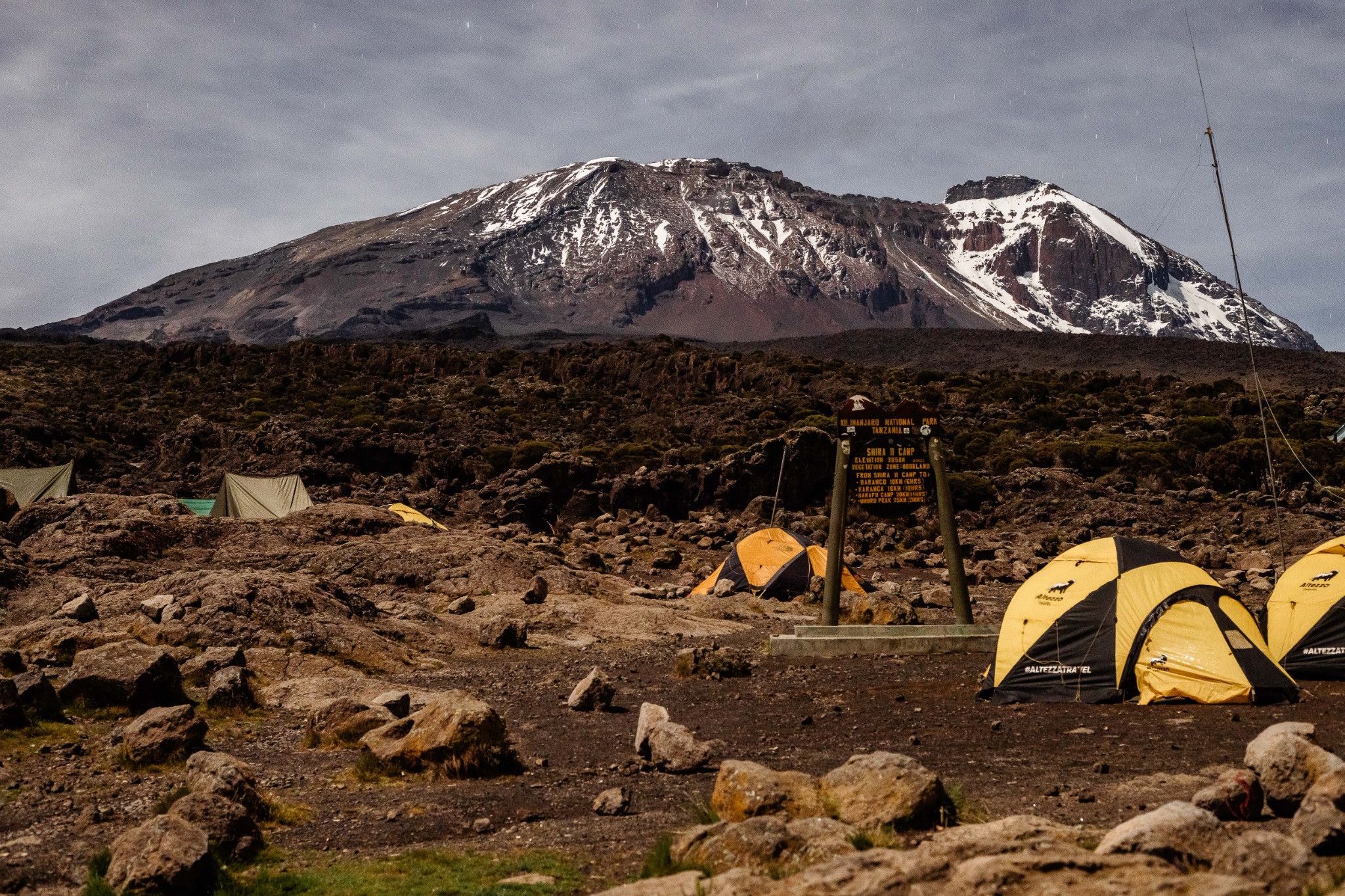
“The Mountain That Shines” is one of the suggested translations of the name Kilimanjaro. Climbing Kilimanjaro counts towards both the Seven Summits and the Volcanic Seven Summits. Reaching its summit ticks off a mountain in both collections. Yet Kilimanjaro is fascinating beyond these projects: it is the roof of Africa, a continent familiar from adventure books and films. Kilimanjaro rises above the Maasai Plateau to 5,895 metres above sea level. Thanks to its proximity to the equator and the shape of the Earth, Uhuru Peak is farther from the Earth’s centre than even the summit of Everest! This journey follows the Lemosho route to the summit of “The Mountain That Shines”. The climbing programme is two days longer than the standard itinerary to allow for more gradual acclimatisation. If you wish, you can add a two-day safari to your trip. It is not included in the programme price; we can confirm the current price with our partner upon request.
Africa’s highest point and highest volcano
An 8-day Lemosho trek with gradual acclimatisation
Day 1
Arrive at Kilimanjaro International Airport (JRO), for a meeting with the team and a transfer to the hotel. Check in and check your equipment. In the evening, there is a team briefing.
Day 2
Transfer to the entrance of Kilimanjaro National Park at Londorossi Gate (2,250 m), trek to Mti Mkubwa Camp (2,650 m), and make an acclimatisation walk to 3,000 m. After breakfast, the group checks out of the hotel, hands over porter duffel bags (15 kg per person), and sets off on the approximately 3–4-hour drive to Londorossi Gate, the entrance to Kilimanjaro National Park at 2,250 m. Once the paperwork is done, the walking part of the journey begins. The walk from Londorossi Gate to Mti Mkubwa Camp takes around 3–4 hours and covers 6 kilometres. The camp is at 2,650 m.
Day 3
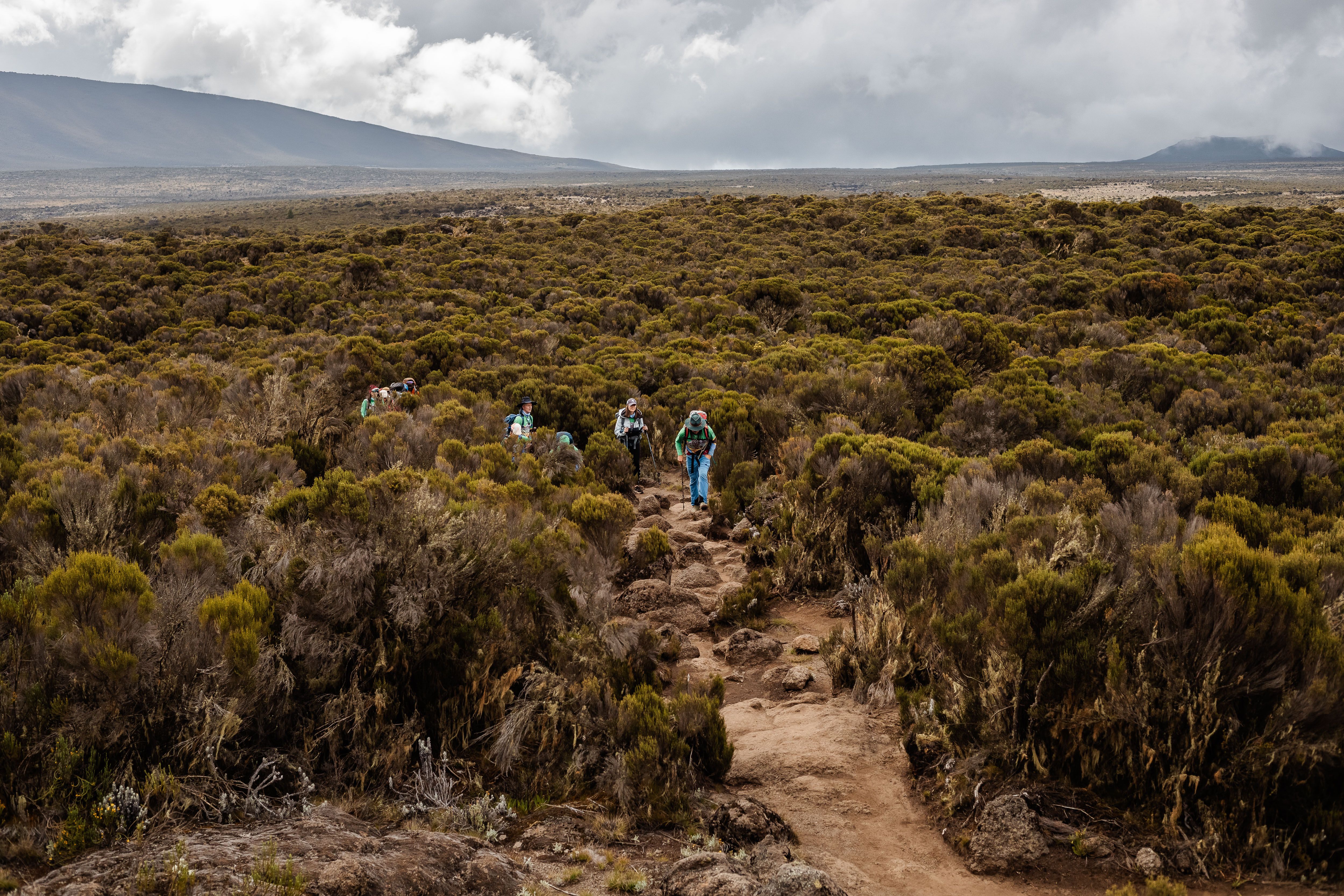
Trek from Mti Mkubwa Camp (2,650 m) to Shira 1 Camp (3,610 m). An early start, packing and breakfast are followed by a walk of around eight kilometres across the Shira Plateau. The altitude gain is very gradual. In good weather, Kibo is visible, Kilimanjaro’s central and highest volcanic cone. Kibo is home to Uhuru Peak, the highest point on Kilimanjaro and in Africa. After 5–6 hours of trekking, the group reaches Shira 1 Camp (3,610 m). After settling into the tents and having lunch, there is time to rest, chat and explore the surrounding area. Briefing and dinner in the evening.
Day 4
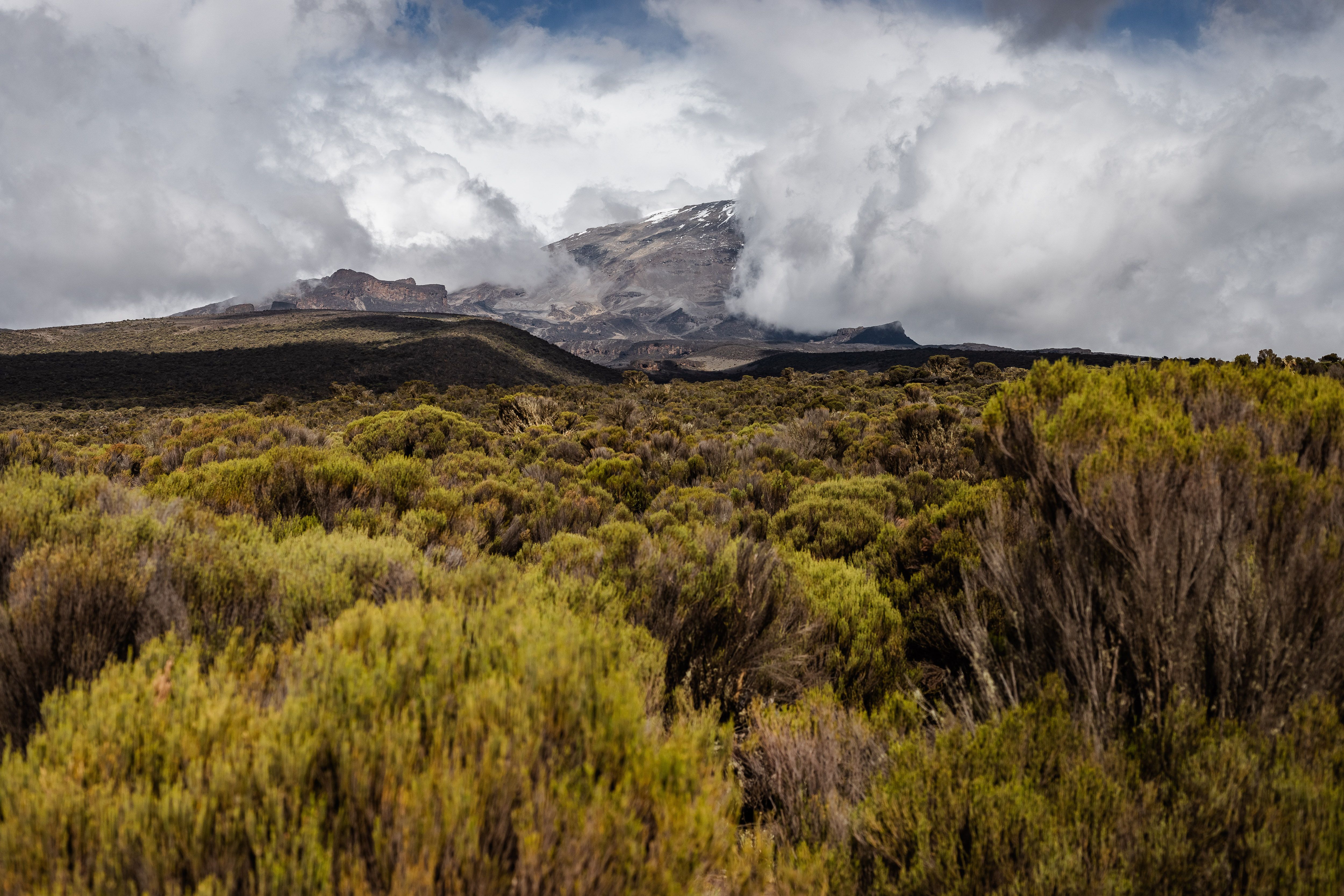
Trek from Shira 1 Camp (3,610 m) to Shira 2 Camp (3,850 m). A scenic walk across the heather-covered plateau lies ahead, with a modest, gradual gain in altitude. If the weather is good, the route includes a climb of Cathedral Peak, which stands at 3,872 m. On arrival at Shira 2 Camp (3,850 m), the group settles into the tents and has lunch. Afterwards, a short walk a little higher is possible. Briefing and dinner in the evening.
Day 5
Trek from Shira 2 Camp (3,850 m) to Barranco Camp (3,900 m) via Lava Tower (4,623 m). During the first half of the day, the route climbs gradually to the camp at 4,623 metres beneath the Lava Tower rock formation. The ascent from Shira 2 Camp to Lava Tower Camp takes around 4–5 hours. Lunch and an acclimatisation stop of at least an hour are planned here. After lunch, the route descends to Barranco Camp (3,900 m), with views of the Barranco Wall. Time to settle into the tents and rest. Briefing and dinner in the evening.
Day 6
Trek from Barranco Camp (3,900 m) to Karanga Camp (3,990 m). An early start. Packing and breakfast are followed by departure. The main obstacle today, and the most interesting part, is the Barranco Wall. It looks huge and sheer, but do not be alarmed: there is a good walking trail with a few easy climbing moves, also known as scrambling. Still, at the foot of the wall, it is best to put away your trekking poles so that both hands stay free until reaching the top of the wall and the shoulder at 4,200 m. After a rest and tea here, trekking poles can be used again for the onward journey to Karanga Camp. From here, descents alternate with climbs, and barren landscapes give way to green heather groves. Many people worry about the Barranco Wall, yet this can become one of the most enjoyable days of the trip. Apart from the summit climb itself, the wall is the most interesting and memorable part. Do not worry. Get ready to enjoy yourself. It really is a brilliant day! Lunch is at Karanga Camp. Afterwards, a short walk with another 200 metres of ascent is possible if energy allows. Briefing and dinner in the evening. And yes, the sunsets here are usually beautiful!
Day 7
Trek from Karanga Camp (3,990 m) to Barafu, the main summit base camp (4,666 m). After reaching summit base camp, a hearty lunch is followed by rest before the night-time summit departure. Dinner may be skipped to avoid interrupting sleep. This is an individual choice: three meals a day are included, and dinner is available to anyone who wants it.
Day 8
Climb from Barafu Camp (4,666 m) to the summit of Kilimanjaro (5,895 m), then descend to Millennium Camp (3,950 m). The high point of the journey, and its longest and most demanding day! But this is the day all the previous stages have been leading towards. Wake-up is at 23:00, followed by breakfast and departure at midnight. A challenging climb leads from summit base camp to the crater up a fairly steep slope, with the zigzags of the trail easing the gradient somewhat. You may often read that Kilimanjaro is an easy mountain, but do not underestimate it: reaching the summit requires good fitness and responsible, disciplined preparation before the trip. The ascent from base camp to the crater rim at Stella Point, at 5,744 m, usually takes 6–7 hours. From Stella Point, there is not far to go: around another hour to an hour and a half of walking with a gentle ascent. There will be time on the summit for photographs and to enjoy the experience and the views. But it is too early to relax. The descent still lies ahead, and it is just as demanding as the ascent, or even harder for some people. The descent leads to Barafu Camp for lunch and packing, followed by the onward descent to Millennium Camp. Millennium is back in the green heather zone, at 3,950 m. By arrival, deep tiredness may be accompanied by an immense sense of achievement. The experience is best discovered in person. Despite the tiredness, the routine remains: a briefing before dinner, because the journey is not over yet, followed by rest in the tents. There is another day of walking tomorrow.
Day 9
Descend from Millennium Camp (3,950 m) to Mweka Gate (1,640 m), the exit from Kilimanjaro National Park. The descent follows a steep trail through the forest, rocky at first and then earthy. Blue monkeys, colobus monkeys and occasionally duikers can be seen here. So, despite the tiredness, it is important to stay focused and attentive. This helps avoid unpleasant falls, even if no animals are spotted. At Mweka Gate, lunch follows the completion of the climb. A transfer then returns the group to the hotel for check-in and a long-awaited shower.
Day 10
Fly home. Or, if you wish, extend ythe journey with a visit to Serengeti and Tarangire National Parks, the Ngorongoro Conservation Area, and/or other places where you can get to know the African wildlife familiar from wildlife programmes. After the programme, you can independently arrange a trip to Zanzibar to relax on the beach and swim in the warm waters of the Indian Ocean. This stay is not included in the programme and is not organised by Sauvage Adventure.
Start by submitting an application and waiting for approval from your trip manager. Pay the deposit within 5 days (120 hours) after your application is approved by the manager, and no later than the programme start. The exact deadline is shown on your trip status page. Your place is secured once we receive it.
The deposit forms part of the total trip price. The deposit pays for consultations, booking services with partners and organising the trip, so it is non-refundable if you choose to cancel your participation.
The remaining balance for your selected departure must be paid no later than April 20, 2027 at 11:59 PM (Astana).
If the deposit is received after the usual balance deadline, the balance is due by the end of the 10th working day in the Astana calendar following the deposit, capped at the programme start. The exact deadline is shown on your trip status page.
If your plans change, notify your trip manager that you wish to cancel. If you have already paid the remaining balance for the programme:
Amounts returned or due to be returned by partners are excluded from the calculation of deducted expenses. The Company’s fee is included in the retained deposit and is not deducted again.
Your trip manager checks the documents and confirms the refund calculation. If cancellation results from the Company’s breach of its obligations, the amount paid, including the deposit, is refunded in full. Refunds are paid within 5 working days in the Astana calendar from the date the grounds for the refund arise, without waiting for funds from the partner.
For full details, see Booking and Payment.