Climbing Lenin Peak — 7,134 m

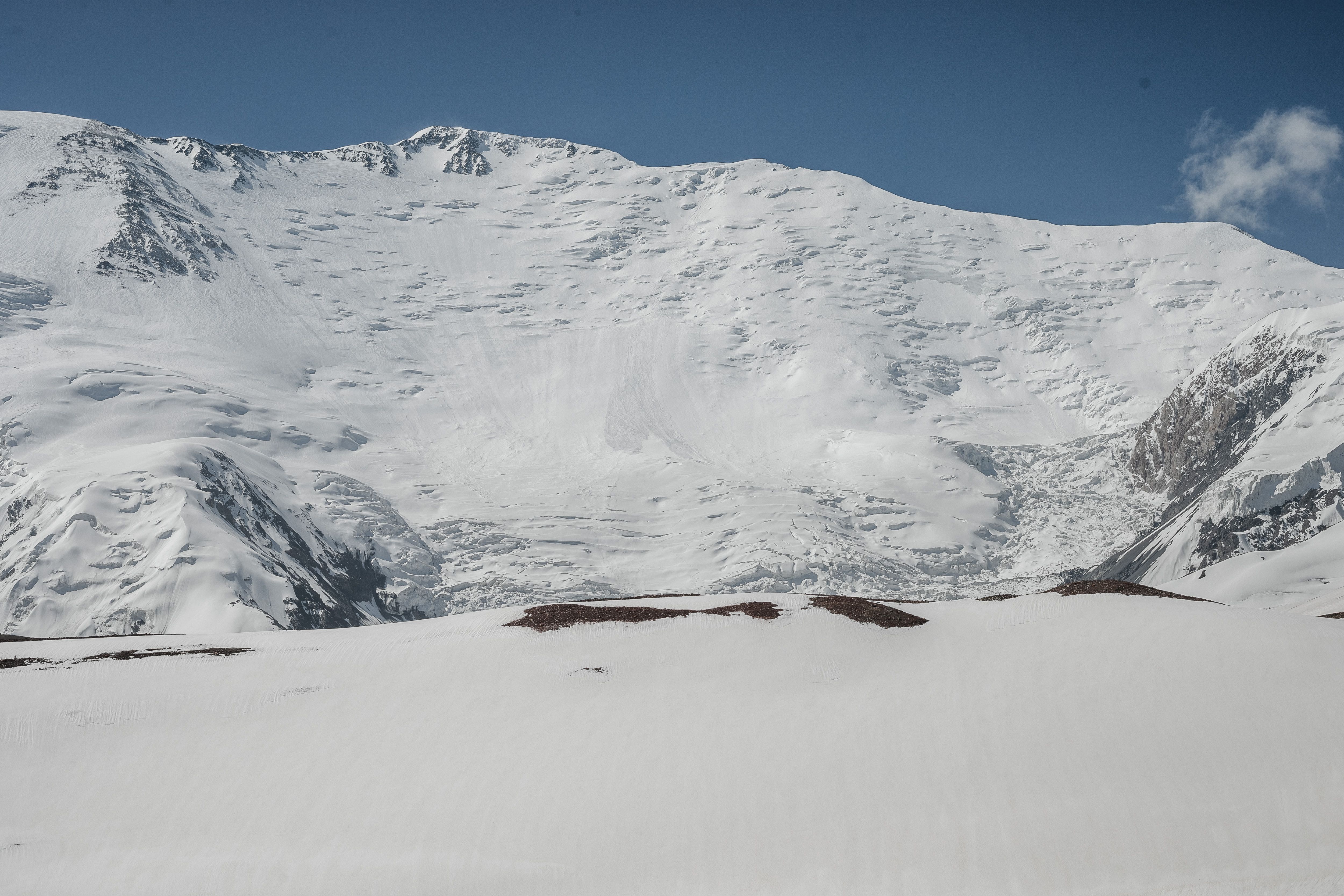
Snow-covered slopes of Lenin Peak beneath a blue sky
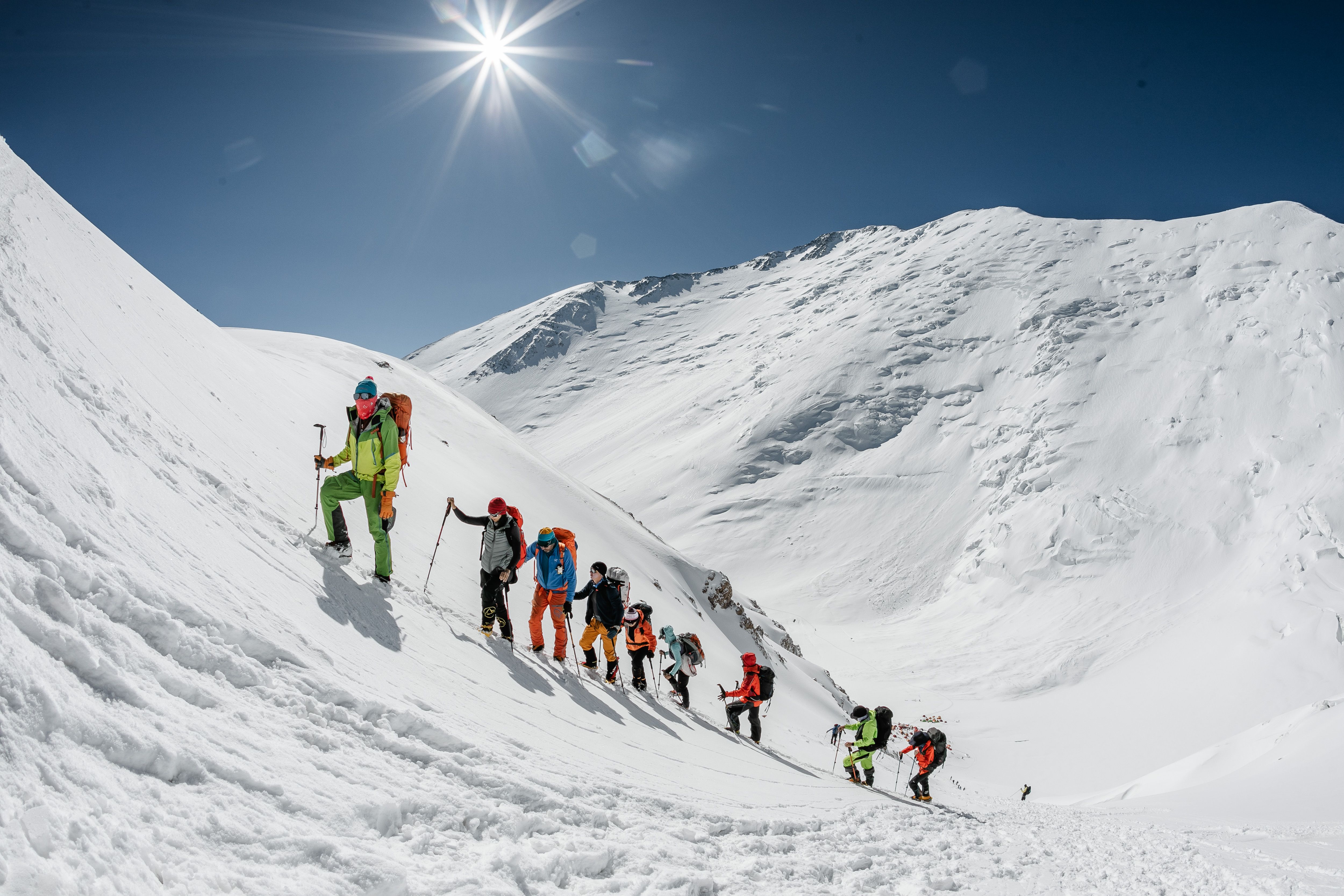
A line of climbers ascending a snowy slope in bright sunlight
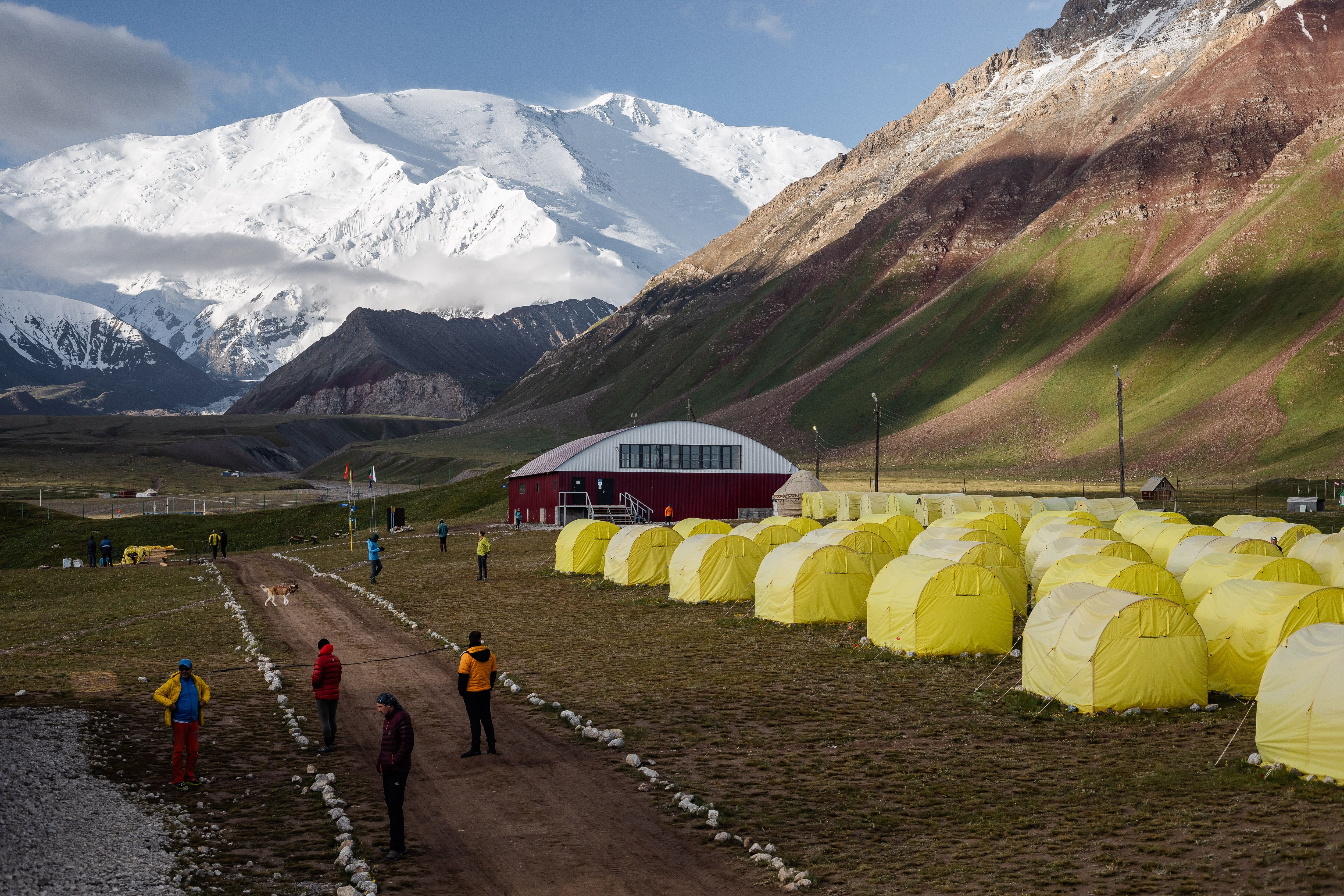
Yellow tents at base camp beneath Lenin Peak

Kyrgyzstan

Country

22 days

Duration

Expedition

Format

Expert

Difficulty

Altitude experience

Preparation level

About the program

In mountaineering and mountain climbing, there is a prestigious peak-collecting challenge known as the Snow Leopard. To complete it, you must climb all five seven-thousanders of the former Soviet Union: Lenin Peak, Communism Peak, Korzhenevskaya Peak, Khan Tengri and Pobeda Peak. These legendary giants lie in two mountain ranges, the Pamirs and the Tian Shan. Most people begin their journey along the “Snow Leopard trail” with an ascent of Lenin Peak, as it is considered the easiest seven-thousander in the challenge. Its classic route is graded 4A. But it is important to understand that no seven-thousander is easy: even the “easiest” is a serious undertaking that requires responsible preparation.

Lenin Peak was first described in scientific literature in 1871 by the Russian geographer and explorer Alexey Pavlovich Fedchenko, who named it Kaufmann Peak in honour of Konstantin Petrovich von Kaufmann, the Governor-General of Turkestan. With the arrival of the new government, the mountain was renamed Lenin Peak. It is still known worldwide by this name, although in Tajikistan it has officially been called Abu Ali ibn Sina Peak since 2006. In Kyrgyzstan, from where almost all ascents are made, the mountain has retained its Soviet name.

The first ascent was made in 1928 during a Soviet-German expedition by German climbers Karl Wien, Eugen Allwein and Erwin Schneider.

Sixteen different mountaineering routes have been climbed to the summit of Lenin Peak: nine from the south and seven from the north. The classic route approaches from the north via Razdelnaya Peak. This is the route we will take together.

This 22-calendar-day expedition takes place in the Pamirs of Kyrgyzstan and starts and finishes in Osh. The objective is Lenin Peak, 7,134 m, with Achik-Tash at approximately 3,600 m serving as base camp.

The program combines arrival and initial acclimatization, technical preparation, high-altitude acclimatization, a summit rotation and the return to Osh. Acclimatization includes outings near base camp and toward the slopes of Petrovsky Peak, an ascent of Yukhina Peak at approximately 5,130 m, and a rotation through camps at 5,300 m and approximately 6,100 m. Rest and recovery at lower altitude precede the summit rotation.

Summit timing is provisional and may be adjusted according to the weather, participants' condition and conditions on the route. The program includes a rest day that can also serve as a contingency day for a delayed summit attempt or descent.

What to expect

❋

A summit attempt on Lenin Peak at 7,134 m

❋

A 22-day expedition starting and finishing in Osh, Kyrgyzstan

❋

Gradual acclimatization, including Yukhina Peak at approximately 5,130 m

Route by day

Day 1

Arrival in Osh

The expedition participants meet in Osh, check into the hotel, get to know the group and expedition leader, and take care of organizational matters. In the evening, we have dinner together, discuss the expedition ahead and prepare to leave for the mountains.

Day 1Route dayHotel in Osh.Accommodation type

Day 2

Osh → Achik-Tash Base Camp, 3,600 m

After breakfast, we leave Osh for the Pamirs. The drive passes through the scenic Alay Valley and mountain passes and takes approximately 5–7 hours. On arrival at base camp, we settle into spacious, standing-height twin tents, get acquainted with the camp facilities, have dinner and attend an introductory briefing.

Day 2Route dayBase camp, 3,600 m.Accommodation type3600 mMax altitude for the day

Day 3

Acclimatization and Equipment Check

Our first full day at altitude includes an easy acclimatization walk near camp, allowing the body to begin adapting gradually. We discuss our altitude strategy, nutrition and hydration, and check participants' physical condition. After lunch, the guides inspect the personal and high-altitude equipment, footwear and clothing needed for Lenin Peak, recommending additional or replacement items if necessary. The evening is for rest and preparation for the next outing.

Day 3Route dayBase camp, 3,600 m.Accommodation type3600 mMax altitude for the day

Day 4

Acclimatization Hike toward Petrovsky Peak

We continue acclimatizing with a hike toward the slopes of Petrovsky Peak, gaining altitude gradually and monitoring how everyone feels. We maintain a relaxed pace, combining ascent and altitude gain with rest before descending.

Day 4Route dayBase camp, 3,600 m.Accommodation type

Day 5

Base Camp → Camp 1, 4,400 m

After breakfast, we set off for Camp 1. The route passes through Onion Meadow and Travelers' Pass before reaching the Lenin Glacier, with altitude increasing gradually along the way. On arrival, we settle in, rest and prepare for the outings ahead. In the evening, we prepare for the ascent of Yukhina Peak.

Day 5Route dayCamp 1, 4,400 m.Accommodation type4400 mMax altitude for the day

Day 6

Acclimatization Ascent of Yukhina Peak, approximately 5,130 m

We leave early for Yukhina Peak, gaining altitude gradually, practicing movement techniques and maintaining an energy-efficient pace. The main objective is to acclimatize above 5,000 m. After reaching the summit, we have lunch, take photographs and return to Camp 1.

Day 6Route dayCamp 1, 4,400 m.Accommodation type5130 mMax altitude for the day

Day 7

Rest and Technical Training

A full recovery day focuses on sleep, food, rest and preparation of high-altitude equipment. We hold practical sessions on the ice covering movement in crampons and use of an ice axe, roped travel, negotiating fixed-rope sections, ascending a rope with a jumar, descending a rope, responding to a fall, and the basics of crevasse rescue. We rest after training.

Day 7Route dayCamp 1, 4,400 m.Accommodation type4400 mMax altitude for the day

Day 8

Rest and Preparation for the High Camps

A recovery day before heading higher. We check equipment, pack our high-altitude backpacks, and distribute group equipment and food. We discuss glacier travel, safety rules and the plan for further acclimatization.

Day 8Route dayCamp 1, 4,400 m.Accommodation type4400 mMax altitude for the day

Day 9

Camp 1 → Camp 2, 5,300 m

We start early, cross the glacier, pass through the Frying Pan area and negotiate snow-and-ice sections equipped with fixed ropes. We ascend to Camp 2 at approximately 5,300 m, moving as efficiently as possible without sudden increases in pace and conserving energy for further acclimatization.

Day 9Route dayCamp 2, 5,300 m.Accommodation type5300 mMax altitude for the day

Day 10

Camp 2 → Camp 3, approximately 6,100 m

A key stage of the acclimatization rotation. We ascend toward Camp 3, where a slow pace, monitoring everyone's condition and careful energy management become especially important. Favorable conditions may allow us to continue toward the area around Razdelnaya Peak. Once the acclimatization objective has been achieved, we begin descending. An overnight stay at approximately 6,100 m is possible if participants are in satisfactory condition and conditions are favorable.

Day 10Route dayCamp 3, approximately 6,100 m, subject to participants' condition and favorable conditions.Accommodation type6100 mMax altitude for the day

Day 11

Descent to Camp 1, 4,400 m

After the high-altitude outing, we begin our descent, passing through Camp 2 and the glacier section on the way back to Camp 1. The main objective is to descend safely and begin recovering from time spent at high altitude.

Day 11Route dayCamp 1, 4,400 m.Accommodation type

Day 12

Camp 1 → Base Camp, 3,600 m

We descend to Achik-Tash. After several days at altitude, returning to base camp gives the body a chance to recover from time spent above 5,000–6,000 m. The evening brings a hot shower, nourishing meals and rest.

Day 12Route dayBase camp, 3,600 m.Accommodation type

Day 13

Rest and Recovery

Full recovery after the acclimatization rotation, with sleep, food, muscle recovery and checks on participants' condition. The expedition leader assesses each participant's readiness for the summit rotation. If necessary, we adjust the plan according to the group's condition and the weather forecast.

Day 13Route dayBase camp, 3,600 m.Accommodation type3600 mMax altitude for the day

Day 14

Base Camp → Camp 1, 4,400 m

After recovering, we begin the second, summit rotation. We ascend to Camp 1 along the familiar route. The earlier acclimatization may make the altitude easier to tolerate, but we continue monitoring everyone closely. On arrival, we settle in, rest and prepare to move to the higher camps.

Day 14Route dayCamp 1, 4,400 m.Accommodation type4400 mMax altitude for the day

Day 15

Camp 1 → Camp 2, 5,300 m

We start early and follow the familiar route, drawing on the experience gained during acclimatization. The objective is to conserve as much energy as possible for the high-altitude summit attempt. We monitor our pace, nutrition and hydration. On reaching Camp 2, we rest and prepare for the next stage.

Day 15Route dayCamp 2, 5,300 m.Accommodation type5300 mMax altitude for the day

Day 16

Camp 2 → Camp 3, approximately 6,100 m

We rise early and climb to Camp 3. After settling in, we rest, eat and prepare equipment and clothing for the summit. In the evening, a detailed summit briefing covers the route, weather forecast, departure time and the order in which the group will move.

Day 16Route dayCamp 3, approximately 6,100 m.Accommodation type6100 mMax altitude for the day

Day 17

Lenin Peak Summit Attempt, 7,134 m

The expedition's main objective. We wake in the middle of the night and leave Camp 3 before dawn. The leader adjusts the start time according to the forecast, participants' condition and route conditions. The route passes through the area of Razdelnaya Peak, 6,148 m, then follows the high-altitude ridge toward the summit. Ahead lie a long traverse, the difficult snow-and-ice Knife section, the Parachutists' Plateau and the final ascent to Lenin Peak at 7,134 m. At the summit, we pause briefly for photographs and to assess the group's condition before descending. Depending on our actual return time, participants' condition and the weather, we spend the night at Camp 3 or lower on the route if it is safe to do so.

Day 17Route dayCamp 3 or lower on the route if safe, depending on return time, participants' condition and the weather.Accommodation type7134 mMax altitude for the day

Day 18

Descent via Camp 2 toward Camp 1

After the summit attempt, we continue descending through Camp 2 toward Camp 1. Even after a successful ascent, this remains physically demanding. We move carefully, monitor participants' condition and observe safety precautions on the glacier and fixed-rope sections. The leader may adjust the pace and final descent point as necessary.

Day 18Route dayPlanned overnight stay at Camp 1, 4,400 m.Accommodation type

Day 19

Camp 1 → Base Camp, 3,600 m

We descend to Achik-Tash, leaving the main high-altitude stage of the expedition behind. At base camp, we rest, enjoy nourishing meals and recover. In the evening, the whole team celebrates the completion of the ascent.

Day 19Route dayBase camp, 3,600 m.Accommodation type

Day 20

Rest and Contingency for Delays

Time to recover at base camp and take care of organizational matters before returning to Osh. If weather delays the summit attempt or additional time is needed for the descent, this serves as a contingency day. In that case, the onward departure schedule is coordinated according to actual conditions and transport availability.

Day 20Route dayBase camp, 3,600 m.Accommodation type3600 mMax altitude for the day

Day 21

Base Camp → Osh

After breakfast, we leave Achik-Tash for Osh. The drive takes approximately 5–7 hours, depending on road conditions. On arrival, we check into the hotel, rest and gather for the group's final dinner.

Day 21Route dayHotel in Osh.Accommodation type

Day 22

Departure from Osh

Breakfast, transfer to the airport and flights home. The expedition comes to an end.

Day 22Route day

What is included

Included

  • Hotel accommodation in Osh: one night on arrival and one night before departure
  • Scheduled transfers from Osh to Achik-Tash base camp and back to Osh
  • Scheduled transfers between base camp and Onion Meadow
  • Accommodation at base camp and Camp 1 in large, spacious twin tents; base-camp tents have electricity and power sockets
  • Three buffet meals a day at base camp and Camp 1
  • Tents at the high-altitude camps at 5,300 m and 6,100 m
  • Services of a professional high-altitude guide, with no more than 3–4 participants per guide
  • Group equipment: ropes for roped travel, a gas stove and two 230 g gas canisters per tent for two participants
  • High-altitude food, including quality freeze-dried meals such as Snedki, Kronidov or Spetsdetal
  • Border permit and registration
  • Environmental fees
  • Radio and use of camp facilities
  • Route advice, first aid and medical consultation at base camp and Camp 1
  • Packed lunches during transfers
  • Oxygen cylinders and masks, kept with the guides throughout the expedition

Not included

  • International flights to and from Kyrgyzstan
  • Insurance covering mountaineering at 7,134 m and evacuation
  • Visa, if required
  • Climbing permit, if separately required
  • Single-occupancy supplements for hotel rooms and tents
  • Additional hotel nights in Osh beyond those included in the package
  • Early hotel check-in and late check-out
  • Meals and drinks outside the specified program
  • Additional deviations from the route
  • Personal expenses
  • Rental of personal mountaineering equipment
  • Porter services and horse transport for personal equipment
  • Additional gas fuel and food for high-altitude camps beyond the package allowance
  • Additional services and expenses arising from expedition delays

Required gear

Nutrition and supplements

  • Isotonic drink mix or electrolytes to dissolve in water — we recommend bringing these for long hikes and climbing, especially in hot weather or when sweating heavily, to replenish salts lost through sweat.
  • Multivitamin and mineral supplement — according to your individual needs. If you take one on your doctor’s advice, bring enough for the entire trip.

Clothing

  • Lightweight thermal base layers: 1–2 sets
  • Heavyweight thermal base layers: 1 set (Sivera Snowy)
  • Warm fleece top and trousers
  • Expedition down jacket
  • 3-layer waterproof-breathable shell jacket and trousers
  • Warm hat
  • Balaclava or neck gaiter
  • Thin fleece gloves: 2–3 pairs
  • Warm gloves or mittens
  • Warm down overmitts
  • Warm trekking socks for different conditions: 4–5 pairs
  • Warm down trousers

Footwear

  • Double or triple high-altitude mountaineering boots
  • Trekking boots
  • Gaiters or high-altitude overboots, if needed

Technical Equipment

  • Climbing harness
  • Crampons
  • Ice axe
  • Climbing helmet
  • Carabiners: 4
  • Ice screw: 1
  • Jumar ascender
  • Reverso-type rappel device
  • Accessory cord: 7 mm diameter, 5 m long
  • Trekking poles with wide baskets
  • Avalanche shovel, according to the organizer's requirements

Personal Equipment

  • 120 L expedition duffel
  • Summit backpack, approximately 40–50 L
  • High-altitude sleeping bag with a comfort rating of −20°C or lower (Sivera Shishiga −17 is also listed as an option)
  • Insulating sleeping mat, preferably a folding mat with an additional inflatable mat
  • Headlamp and spare batteries
  • Category 4 sunglasses
  • SPF 50+ sunscreen
  • 1 L thermos and a water bottle
  • Dry bags for belongings
  • Mug, spoon and personal eating utensils
  • Phone, chargers and power bank

Personal First-Aid Kit and Documents

  • Personal medication
  • Adhesive plasters and blister treatment supplies
  • Personal hygiene items
  • Passport and required documents
  • Insurance covering mountaineering up to 7,134 m and evacuation

Important Equipment Notes

  • Technical equipment, sleeping-bag requirements and high-altitude footwear must be agreed with the expedition leader in advance. Some equipment may be available to rent at base camp.

Frequently asked questions

Can the summit schedule change?
  • Yes. Summit timing is provisional and may be adjusted according to the weather, participants’ condition and conditions on the route. The rest day can be used as a contingency day if the summit attempt or descent is delayed.
How do booking, payment and cancellations work?

Start by submitting an application and waiting for approval from your trip manager. Pay the deposit within 5 days (120 hours) after your application is approved by the manager, and no later than the programme start. The exact deadline is shown on your trip status page. Your place is secured once we receive it.

The deposit forms part of the total trip price. The deposit pays for consultations, booking services with partners and organising the trip, so it is non-refundable if you choose to cancel your participation.

The remaining balance for your selected departure must be paid no later than May 11, 2027 at 11:59 PM (Astana).

If the deposit is received after the usual balance deadline, the balance is due by the end of the 10th working day in the Astana calendar following the deposit, capped at the programme start. The exact deadline is shown on your trip status page.

If your plans change, notify your trip manager that you wish to cancel. If you have already paid the remaining balance for the programme:

  • If the Company receives your cancellation notice at least 60 calendar days before the programme starts, the remaining balance paid is refunded in full.
  • If your cancellation notice is received fewer than 60 calendar days before the programme starts, actual, documented expenses incurred in preparing your trip and not covered by the deposit may be deducted from the remaining balance paid. If there are no such expenses, the remaining balance paid is refunded in full.

Amounts returned or due to be returned by partners are excluded from the calculation of deducted expenses. The Company’s fee is included in the retained deposit and is not deducted again.

Your trip manager checks the documents and confirms the refund calculation. If cancellation results from the Company’s breach of its obligations, the amount paid, including the deposit, is refunded in full. Refunds are paid within 5 working days in the Astana calendar from the date the grounds for the refund arise, without waiting for funds from the partner.

For full details, see Booking and Payment.